
Festivals also contribute to the rise in overall automobile retail sales, says dealers association.
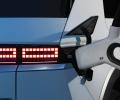
Under FAME-II, automakers provided subsidies to electric vehicle (EV) customers at the time of purchase, with the understanding that the government would reimburse the firms later.

Suzuki Motorcycle India Ltd (SMIPL) has revised its domestic two-wheeler sales growth estimate for FY27 downwards from 7-8 per cent, citing rising commodity costs due to the ongoing West Asia conflict and its impact on consumer affordability.

Domestic passenger vehicle dispatches in India rose 10.6% in February, driven by utility vehicles and two-wheelers, but the industry remains cautious due to geopolitical tensions.

India's rapidly ageing truck fleet, with 42% of vehicles over 12 years old, is set to trigger a replacement-driven growth of 3-5% annually over the next five years.

Automobile retail sales across the domestic market witnessed a 21 per cent year-on-year increase in the 42-day festive season led by record registrations of passenger vehicles and two-wheelers aided by GST rejig enabled drop in prices across segments, dealer' body FADA said on Friday.

Consumers are preferring time-tested category leaders or vehicles that are relevant to the Indian market.

Vietnamese automobile major VinFast is rapidly expanding its retail network in India, aiming for 75 dealerships across 60 cities by the end of 2026, while also building a comprehensive EV ecosystem.

'So far our production is not affected. But every day the situation prolongs, it does bring risks in terms of shipments getting delayed.'

A host of macroeconomic data announcements, global trends and trading activity of foreign investors would dictate investors' sentiment in the stock market this week, analysts said. Besides, auto sales data will be closely tracked, experts noted.

'The market is still very bullish. The demand is so strong that for eight models, we have no units in our factories to dispatch to dealers,' said Partho Banerjee, senior executive officer, marketing & sales, Maruti Suzuki India (MSIL).
Rising automobile exports are reflective of the increasing acceptance of India-manufactured vehicles across global markets, according to Economic Survey 2025-26.
Automobile retail sales increased 9 per cent year-on-year in June quarter FY25 with all segments, barring tractors, reporting growth, dealers' body FADA said on Monday. Overall retail sales rose to 61,91,225 units in the April-June period from 56,59,060 units in the same quarter of FY24. Passenger vehicle retails increased 2.53 per cent to 920,047 units as against 897,361 units a year ago.

Despite India's electric passenger vehicle market experiencing an 83.6% year-on-year surge in FY26, new foreign entrants VinFast and BYD have significantly outpaced Tesla, which struggles with high import duties, a limited retail footprint, and a lack of local manufacturing commitment.

In 2025, the Maruti Suzuki Dzire has emerged as India's top-selling car, while sport utility vehicles continue to rule the broader passenger vehicle market, capturing almost 55 per cent of the segment.

While GST on ICE vehicles was brought down significantly, for electric cars it remained at 5 per cent.

Supported by strong buoyancy in public sector capital expenditure (capex), growth in infrastructure investment is expected to accelerate in 2025-26 (FY26) compared to 2024-25 (FY25), according to the First Advance Estimates of gross domestic product (GDP) for FY26 released by the National Statistics Office (NSO) on Wednesday.

Passenger vehicle retail sales shot up 35 per cent year-on-year during the nine-day Navratri period this year, helping the overall registrations last month grow 6 per cent, as offtakes remained muted in the first 21 days of the month and only took off after the roll-out of new GST rates on September 22, dealer' body FADA said on Tuesday.

The production-linked incentive (PLI) scheme for the automobile sector has created market distortions, excluded innovation-led electric two-wheeler (e2w) makers, and failed to convert cost advantages into export competitiveness, with 77 per cent of export volumes driven by non-PLI models, said a report released by the Centre for Domestic Economy Policy Research (C-DEP) on Friday.
Domestic passenger vehicle dispatches from companies to dealers rose 13 per cent year-on-year to 449,616 units in January with demand remaining robust owing to GST rate rationalisation and subsequent dip in prices, industry body SIAM said on Friday.

Electric passenger vehicle (PV) retail sales jumped more than twofold in September with Tata Motors (TaMo) leading the pack having over 6,000 registrations and a 40 per cent market share.

Overall economic activity continued to hold up in November with demand conditions remaining robust, thanks to strengthening urban demand, but manufacturing and rural demand showed some signs of deceleration even as services remained strong, according to an article on the State of the Economy written by Reserve Bank of India (RBI) officials in the central bank's December bulletin.

Speculation about rising competition from global majors has led to shares of major Indian automobile manufacturers such as Mahindra & Mahindra (M&M), Maruti Suzuki India, and Tata Motors taking a hit on the BSE.

Domestic automobile retail sales rose 10 per cent in June driven by sales growth across various segments, including passenger vehicles and two-wheelers, automobile dealers body FADA said on Thursday. Total retail sales last month rose to 18,63,868 units from 17,01,105 units in the year-ago period. Passenger vehicle retail sales increased 5 per cent to 2,95,299 units as against 2,81,811 units in June 2022.

The demand for passenger vehicles (PVs) is expected to sustain even beyond the ongoing festival season as a new set of customers, those who gained confidence to buy cars following the recent GST rate cuts, will begin to visit dealerships now, said Shailesh Chandra, president of the Society of Indian Automobile Manufacturers (Siam), on Wednesday.

Between April and August this financial year, passenger car exports rose 8.5 per cent year-on-year (Y-o-Y), while domestic sales fell by 8.5 per cent.

India's two-wheeler industry is seen growing 6-9% in 2026, though a proposed ABS mandate for sub-125cc models could push up prices and temper volumes.
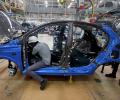
Automobile dispatches from companies to dealers rose 12 per cent last year compared to 2023 on the back of positive consumer sentiments which aided robust demand for two-wheelers, industry body SIAM said on Tuesday. Total wholesales across categories rose to 2,54,98,763 units in 2024 against 228,39,130 units in 2023, a growth of 11.6 per cent.

The tariff removal will lower prices of Harley's large-displacement imported motorcycles, which retail between 14.5 lakh and 45.8 lakh but after the duty cut volumes are expected to remain modest.
Automobile retail sales in India rose 6 per cent to 2,61,43,943 units in FY25 with rural areas performing better than urban regions across passenger vehicle and two-wheeler segments, dealers' body FADA said on Monday. The last financial year saw growth in sales of passenger vehicles, two-wheelers and three-wheelers.

Two-wheeler sales volume is expected to grow 5-6 per cent this fiscal, while that of passenger vehicles to see a 2-3 per cent rise, following the GST rates rationalisation on automobiles, according to Crisil Ratings. The GST Council's decision to move to a two-rate structure of 5 per cent and 18 per cent, effective September 22, 2025, is a timely move that will revive demand for automobiles, Crisil Ratings said in a statement.
Total vehicle retail sales in India rose 27 per cent year-on-year to 22,06,070 units in April as all segments, including passenger vehicles and two-wheelers, witnessed growth, industry body FADA said on Wednesday. The overall vehicle registrations stood at 17,40,649 units in April 2023. Passenger vehicle retail sales rose 16 per cent to 335,123 units last month as compared to 289,056 units in the same month last year.

Passenger vehicle dispatches from companies to dealers raced to the highest ever sales mark in a calendar year in 2025 as a reduction in prices due to GST reforms led to robust sales in the festive season, industry body SIAM said on Tuesday.
Automobile retail sales in India rose by 9 per cent in August aided by sales growth in all segments, including passenger vehicles and two wheelers, dealers' body FADA said on Tuesday. The total retail sales across segments rose to 18,18,647 units last month, up 9 per cent, from 16,74,162 units in August 2022. Passenger vehicle registrations increased by 7 per cent to 315,153 units last month from 295,842 units in August 2022.

Kerala has overtaken more industrialised states in personal electric vehicle adoption, driven by strong middle-class uptake, policy support, and charging infrastructure.

Auto majors Maruti Suzuki, Tata Motors and Mahindra & Mahindra reported robust sales in September as reduced price tags owing to GST rationalisation led to record demand in the Navaratri period. The month also saw Tata Motors and Mahindra & Mahindra settling at number two and three positions, respectively in vehicle wholesales ahead of Hyundai Motor India.
The country's largest carmaker Maruti Suzuki India expects auto sales to bounce back to the glory days of 7 per cent growth by FY 27, helped by the proposed GST rate cut which is expected to bring down car prices by 3.5 to 8.5 per cent.

Electric vehicle (EV) sales in India rose 28.60 per cent to 1,80,238 units in June over the period year-ago, driven by massive jump in e-passenger vehicle volumes, Federation of Automobile Dealers' Association (FADA) said in a statement on Tuesday. Electric passenger vehicle sales, as per FADA data, stood at 13,178 units in the previous month compared to 7,323 e-PVs in June 2024, registering a sharp increase of 79.95 per cent year-on-year.

Passenger vehicle dispatches from companies to dealers increased 19 per cent year-on-year in November as demand remained robust post festive period, industry body SIAM said on Friday.

The country's largest listed auto parts company by market capitalisation, Samvardhana Motherson International, reported a better than expected operating performance in the second quarter (July-September) of 2025-26 (Q2FY26). Though the global passenger vehicle (PV) market is facing multiple headwinds, the company is outperforming on the back of higher content per vehicle and market share gains.
